El Último Telón del Calderón
(The Calderón's Final Curtain)
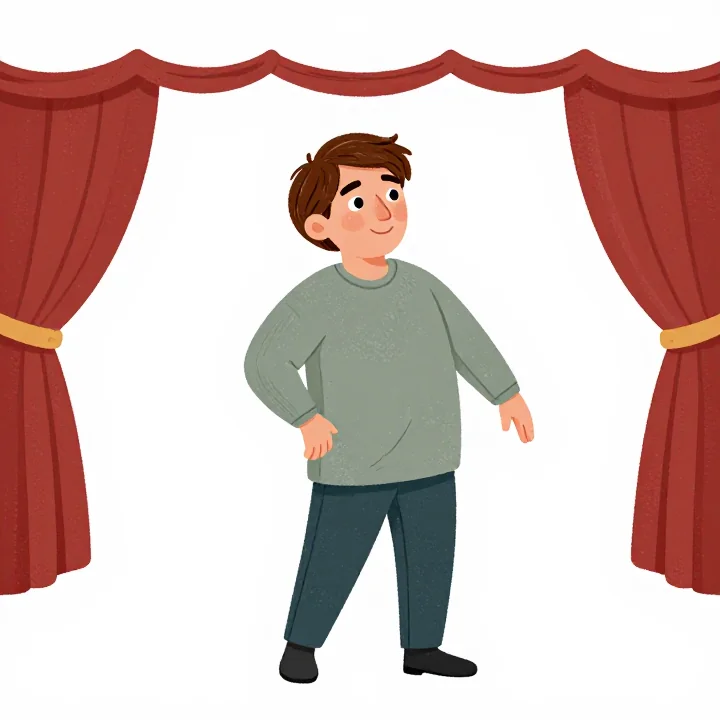
Si alguien le hubiera dicho a Pilar, hace treinta años, que el Teatro Calderon acabaría cerrando sus puertas, ella habría pensado que era una broma de mal gusto.
If someone had told Pilar, thirty years ago, that the Teatro Calderon would end up closing its doors, she would have thought it was a joke in bad taste.
Aquel edificio había sido el corazón cultural del pueblo durante más de un siglo, y resultaba imposible imaginar la plaza sin su fachada de piedra dorada y sus carteles pintados a mano.
That building had been the cultural heart of the town for more than a century, and it was impossible to imagine the square without its golden stone facade and its hand-painted posters.
Sin embargo, los tiempos habían cambiado.
However, times had changed.
Se decía que la gente ya no iba al teatro como antes, que prefería quedarse en casa viendo series en la pantalla del móvil.
It was said that people no longer went to the theatre as before, that they preferred to stay at home watching series on their phone screens.
El ayuntamiento había recortado las subvenciones, y los pocos artistas que aun se atrevian a actuar allí lo hacian casi por caridad.
The city council had cut the subsidies, and the few artists who still dared to perform there did so almost out of charity.
La directora, doña Carmen, les había comunicado a todos que la función del sábado sería la ultima.
The director, Dona Carmen, had told everyone that Saturday's show would be the last.
Pilar había trabajado como acomodadora durante tres decadas.
Pilar had worked as an usherette for three decades.
Conocía cada butaca, cada crujido del escenario, cada corriente de aire que se colaba entre bastidores.
She knew every seat, every creak of the stage, every draught that slipped in backstage.
Aunque le habían ofrecido otros empleos a lo largo de los años, nunca había querido marcharse.
Although she had been offered other jobs over the years, she had never wanted to leave.
Le parecía que abandonar el teatro habría sido como traicionar a una vieja amiga.
It seemed to her that abandoning the theatre would have been like betraying an old friend.
La noche de la ultima función, Pilar se puso su uniforme azul oscuro, el mismo que llevaba desde que se lo habían confeccionado a medida en una sastreria que también había desaparecido.
On the night of the last show, Pilar put on her dark blue uniform, the same one she had worn since it had been made to measure for her in a tailor's shop that had also disappeared.
Se miró en el espejo y, aunque las arrugas le habían transformado el rostro, reconoció en sus propios ojos la misma ilusión que había sentido el primer día.
She looked at herself in the mirror and, although the wrinkles had transformed her face, she recognised in her own eyes the same excitement she had felt on the first day.
El teatro se lleno como no se había llenado en años.
The theatre filled up as it had not filled in years.
Habían venido vecinos que Pilar no había visto desde hacia mucho tiempo, familias enteras con niños que nunca habían pisado un teatro.
Neighbours whom Pilar had not seen for a long time had come, entire families with children who had never set foot in a theatre.
Doña Carmen salió al escenario antes de que se levantara el telon y dijo, con la voz temblando: <<Esta noche no les pido que aplaudan por los actores, sino que aplaudan por este lugar que nos ha dado tanto.>>
Dona Carmen came out on stage before the curtain was raised and said, with her voice trembling: <<Tonight I do not ask you to applaud for the actors, but rather to applaud for this place that has given us so much.>>
La obra fue recibida con un aplauso que duro varios minutos.
The play was received with applause that lasted several minutes.
Pilar, de pie junto a la puerta de salida, observó como el público se ponia en pie, como algunos se abrazaban y como otros se secaban las lagrimas con disimulo.
Pilar, standing by the exit door, watched as the audience rose to their feet, as some embraced and as others discreetly wiped away their tears.
Pensó que quizá el teatro no desapareceria del todo mientras hubiera personas capaces de conmoverse así.
She thought that perhaps the theatre would not disappear entirely as long as there were people capable of being moved like that.
Al salir, un hombre mayor se detuvo frente a ella. <<Usted es Pilar, la acomodadora, ¿verdad?>>, preguntó.
On the way out, an older man stopped in front of her. <<You are Pilar, the usherette, aren't you?>> he asked.
Ella asintio. <<Mi madre siempre me contaba que usted la había ayudado a encontrar su butaca la noche en que mi padre le pidió matrimonio aquí, en este mismo teatro.>> Pilar sonrió, porque recordaba perfectamente aquella noche.
She nodded. <<My mother always used to tell me that you had helped her find her seat the night my father proposed to her here, in this very theatre.>> Pilar smiled, because she remembered that night perfectly.
Le dijo que esperaba que aquel recuerdo viviera más alla de las paredes que lo habían albergado, y que mientras alguien lo contara, el teatro seguiria existiendo de alguna manera.
She told him that she hoped that memory would live beyond the walls that had housed it, and that as long as someone told the story, the theatre would continue to exist in some way.
Key Vocabulary
la butaca seat (in a theatre), armchair
entre bastidores backstage, behind the scenes
el telon curtain (theatre)
la subvencion subsidy, grant
la sastreria tailor's shop, tailoring
confeccionar to make (clothes), to tailor
conmoverse to be moved, to be touched (emotionally)
albergar to house, to shelter, to harbour
la acomodadora usherette, female usher
el disimulo concealment, pretence, discretion