La Panadería de la Cuesta
(The Bakery on the Hill)
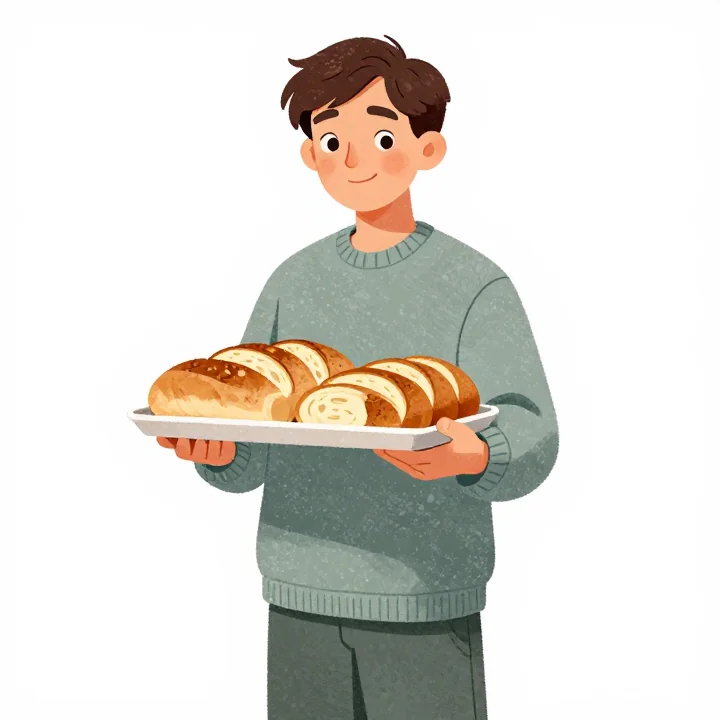
Si alguien le hubiera dicho a Tomás Reyes que acabaría heredando una panadería en un pueblo de doscientos habitantes, se habría reído.
If someone had told Tomás Reyes that he would end up inheriting a bakery in a village of two hundred inhabitants, he would have laughed.
Durante quince años había trabajado como analista financiero en Madrid, rodeado de pantallas que parpadeaban con números que ya no significaban nada para él.
For fifteen years he had worked as a financial analyst in Madrid, surrounded by screens that flickered with numbers that no longer meant anything to him.
Pero cuando su tía Consuelo falleció y le dejó el negocio en su testamento, algo que llevaba dormido dentro de él despertó de golpe.
But when his aunt Consuelo passed away and left him the business in her will, something that had been sleeping inside him woke up all at once.
Los primeros meses fueron desastrosos.
The first months were disastrous.
La masa se le pegaba a las manos, los panes salían quemados o crudos, y los vecinos, que habían adorado el pan de Consuelo, lo miraban con una mezcla de lástima y desconfianza.
The dough stuck to his hands, the loaves came out burnt or raw, and the neighbours, who had adored Consuelo's bread, looked at him with a mixture of pity and mistrust.
Dolores, la dueña de la tienda de ultramarinos, le dijo un día sin rodeos: <<Tu tía habría llorado si hubiera visto ese pan.
Dolores, the owner of the grocery shop, told him one day without beating around the bush: <<Your aunt would have cried if she had seen that bread.
No te ofendas, pero parece una piedra.>>
No offence, but it looks like a rock.>>
Tomás no se ofendió.
Tomás was not offended.
Sabía que Dolores tenía razón.
He knew that Dolores was right.
Así que empezó a buscar las recetas que su tía supuestamente había dejado escritas en algún lugar.
So he began to search for the recipes that his aunt had supposedly left written down somewhere.
Fue entonces cuando encontró, escondido detrás de unos sacos de harina, un cuaderno manchado de grasa cuyas páginas estaban llenas de una letra diminuta.
It was then that he found, hidden behind some sacks of flour, a grease-stained notebook whose pages were filled with tiny handwriting.
Las recetas no solo incluían ingredientes y cantidades, sino también notas personales que revelaban la filosofía de Consuelo: <<El pan se hace con las manos, pero se piensa con el corazón.>>
The recipes did not just include ingredients and quantities, but also personal notes that revealed Consuelo's philosophy: <<Bread is made with the hands, but it is thought with the heart.>>
Tomás siguió las instrucciones al pie de la letra.
Tomás followed the instructions to the letter.
Se levantaba a las cuatro de la mañana, preparaba la masa como se indicaba en el cuaderno y dejaba que reposara el tiempo exacto que Consuelo había anotado.
He got up at four in the morning, prepared the dough as indicated in the notebook, and let it rest for the exact time that Consuelo had noted down.
Al cabo de unas semanas, el pan empezó a mejorar.
After a few weeks, the bread began to improve.
No era perfecto, pero ya no se parecía a una piedra.
It was not perfect, but it no longer resembled a rock.
Dolores le comentó que su madre había dicho que aquel pan le recordaba al de antes, y que eso, viniendo de su madre, era todo un cumplido.
Dolores mentioned to him that her mother had said that that bread reminded her of the old one, and that that, coming from her mother, was quite a compliment.
Lo que más le costó a Tomás no fue aprender a amasar, sino acostumbrarse al ritmo del pueblo.
What was hardest for Tomás was not learning to knead, but getting used to the rhythm of the village.
En Madrid todo se hacía deprisa: se comía de pie, se hablaba por teléfono mientras se caminaba y las conversaciones rara vez duraban más de lo estrictamente necesario.
In Madrid everything was done quickly: people ate standing up, talked on the phone while walking, and conversations rarely lasted longer than what was strictly necessary.
Aquí, en cambió, la gente entraba en la panadería y se quedaba media hora charlando sobre el tiempo, las cosechas o los nietos que no venían a visitarlos con la frecuencia que deberían.
Here, on the other hand, people came into the bakery and stayed for half an hour chatting about the weather, the harvests, or the grandchildren who did not come to visit them as often as they should.
Un año después, Tomás fue entrevistado por un periódico regional.
A year later, Tomás was interviewed by a regional newspaper.
El periodista le preguntó si echaba de menos su vida anterior.
The journalist asked him if he missed his previous life.
Tomás respondió que al principio había echado de menos la velocidad, el ruido, la sensación de que cada minuto contaba para algo. <<Pero luego comprendí que aquí los minutos también cuentan>>, añadió. <<Solo que se cuentan de otra manera.
Tomás replied that at first he had missed the speed, the noise, the feeling that every minute counted for something. <<But then I understood that here the minutes count too,>> he added. <<Only they are counted in a different way.
Se cuentan en hogazas que salen del horno, en vecinos que te saludan por tu nombre y en atardeceres que nadie tiene prisa por perderse.>>
They are counted in loaves that come out of the oven, in neighbours who greet you by your name, and in sunsets that nobody is in a hurry to miss.>>
Aquella noche, después de cerrar la panadería, Tomás se sentó en el banco que había junto a la puerta y contempló la cuesta empedrada que bajaba hacia la plaza.
That night, after closing the bakery, Tomás sat down on the bench beside the door and gazed at the cobbled hill that went down towards the square.
Pensó que si su tía pudiera verlo ahora, quizá no habría llorado por el pan.
He thought that if his aunt could see him now, perhaps she would not have cried about the bread.
Quizá habría sonreído al ver que su sobrino, aquel niño de ciudad que nunca había querido mancharse las manos de harina, por fin había encontrado algo que merecía la pena amasar despacio.
Perhaps she would have smiled to see that her nephew, that city boy who had never wanted to get his hands dirty with flour, had finally found something that was worth kneading slowly.
Key Vocabulary
heredar to inherit
la panadería the bakery
la masa the dough
amasar to knead
la hogaza the loaf (of bread)
el testamento the will, the testament
la desconfianza the mistrust, the distrust
echar de menos to miss (someone or something)
el atardecer the sunset, the dusk
merecer la pena to be worth it